Gizoogle: Amusing tribute or racist caricature? – NSFW (part 3)

gizoogle-linguisticpulse

The header for this website as represented by Gizoogle. linguistic pulse: analyzin tha circulation of discourse up in society

In my last couple of posts (here and here), I’ve been looking at the website Gizoogle, which basically translates the language of web content into language that is modeled after the hip-hop artist Snoop Dogg (see the first post for a more thorough overview of what Gizoogle is). In particular, I’ve been trying to answer this question: Is Gizoogle an amusing tribute to Snoop Dogg or is it a racist caricature of African-American English (AAE)? I believe to fully answer such a question we have to look at multiple parts of the issue. So in the first part I examined the stated intentions of the website creators, and, in the second part, I began looking at the language that Gizoogle actually produces and how accurate it is as a representation of Snoop Dogg’s speech and AAE more generally. In that post, I approached this question by simply asking whether Gizoogle made errors in trying to use AAE and Snoop Dogg’s speech style. In this post, I’m going to take a more nuanced approach. Read more ›
Tagged with: , , , , , , , , , , , ,
Posted in Ideology and social change, Language and race, Linguistic diversity, Technology and language

Gizoogle: Amusing tribute or racist caricature? – NSFW (part 2)

gizoogle-sociolinguistics-search-results

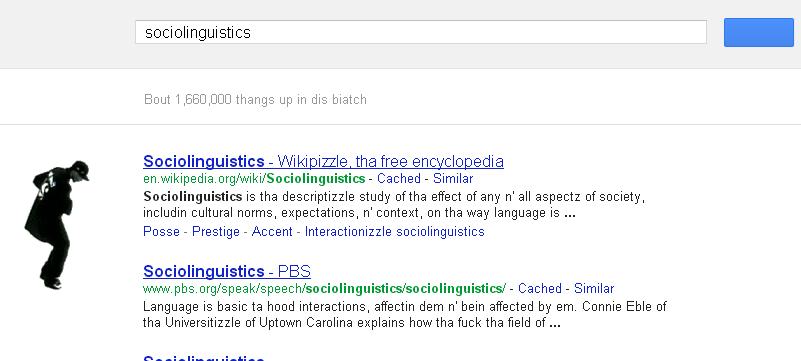
In my last post, I took up the question of whether the website Gizoogle (see the previous post for an explanation of it) is an amusing tribute to hip-hop artist Snoop Dogg, a racist caricature of African American English (AAE), or perhaps something in between. In that post, I discussed the issue from the point of view of the website’s creators, specifically what their stated intentions were or what the website means to them. In this post, I take up the question of what the website actually does, what the language it produces is like and especially how accurate it is as a representation of either Snoop Dogg’s speech or AAE more generally. Read more ›

Tagged with: , , , , , , , , , , , , , ,
Posted in Ideology and social change, Language and race, Linguistic diversity, Technology and language

Gizoogle: Amusing tribute or racist caricature? – NSFW (part 1)

gizoogle-frontpage

Just as a warning: this post contains a number of examples from the website Gizoogle, which uses quite a bit of language not appropriate for many workplaces.

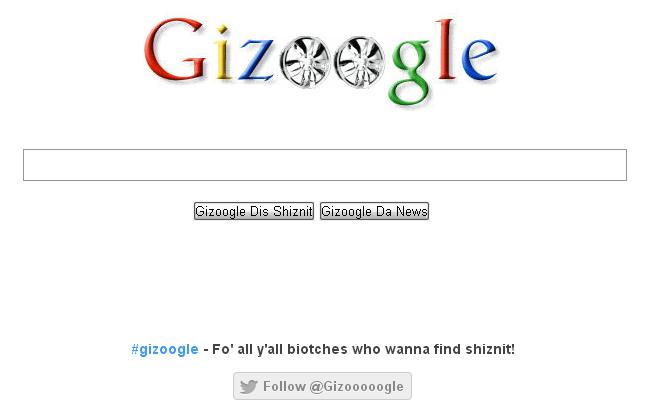
Gizoogle, as shown in the picture above, is a website that parodies the search format of Google by modifying the language of Google and its search results using language patterns reminiscent of the rapper widely known as Snoop Dogg Read more ›

Tagged with: , , , , , , , , , , , ,
Posted in Ideology and social change, Language and race, Linguistic diversity, Technology and language

Hearing skin color: The connections between language and race

What is race? What does it mean to be White, Black, Asian, Latina/o, or any other identifiable race? Most of us probably think of it as something marked on our bodies. It’s the pigment of our skin, the shape of our eyes, the size of our noses or brows. Of course, we’re not wrong about these ideas. It’s a well-documented fact that people do assign others a category of race relying on features like skin color and facial features (see, for example, this study).

However, physical features are not the whole story. Read more ›

Tagged with: , , , , , , , , , , , ,
Posted in Human migration, Ideology and social change, Language and race, Linguistic diversity, Prescriptivism and language prejudice

Linguistic diversity in the classroom (part 2): Multilingualism and academic writing

In my previous post, I presented my approach to balancing two competing needs: (1) preparing students who speak ‘nonstandard’ English to succeed as academic writers and (2) creating an environment that promotes respect for linguistic diversity among my students while making small steps toward countering language privilege. Specifically, I talked about how I apply this approach to African American English (AAE) speakers in my academic writing classes.

In this post, I want to describe this same approach for working with another group who have considerably different needs: multilingual students, specifically those who have learned English as a second (or third, fourth, etc.) language. Read more ›

Tagged with: , , , , , , , ,
Posted in Human migration, Language and education, Linguistic diversity

Enter your email address to follow this blog and receive notifications of new posts by email.

Join 466 other subscribers